Construction to Permanent Loan Mechanics for CRE Sponsors
How construction loans convert to permanent debt and what sponsors must prove along the way.
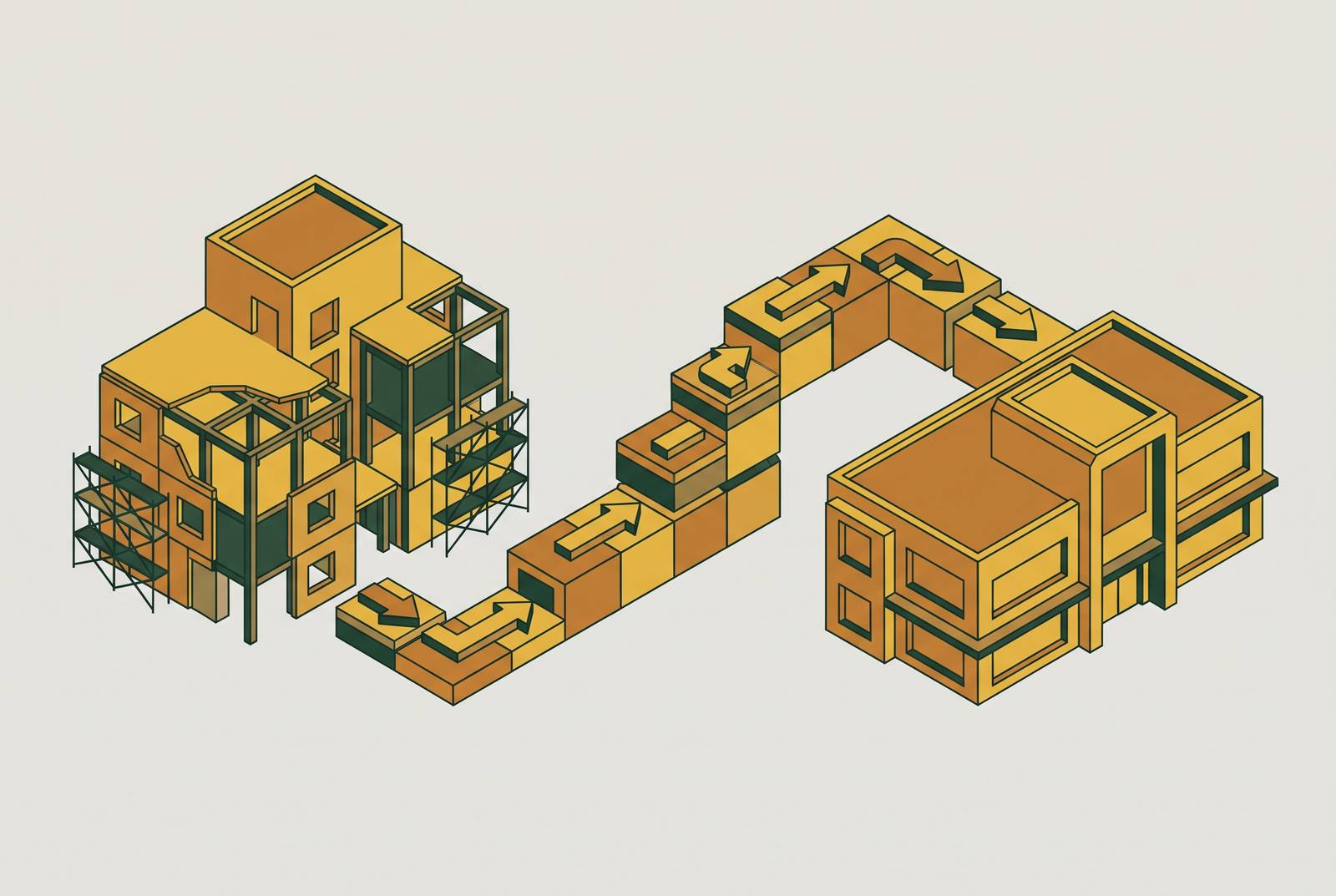
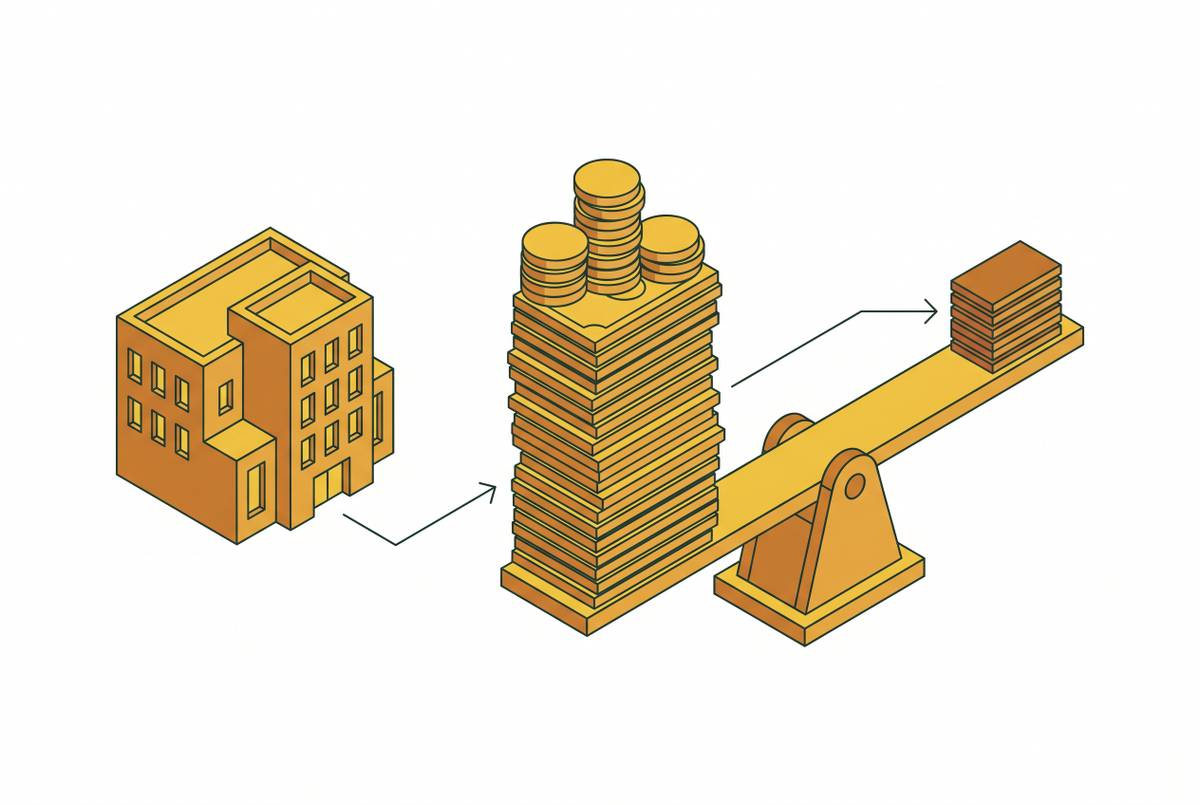
A construction-to-permanent loan links construction funding to long-term debt, but its value depends on more than eliminating a second closing. For CRE sponsors, the governing principle is that construction funding must remain supportable through stabilization. Sizing tests, draw controls, reserves, and conversion conditions form one underwriting chain, and a weakness at any point can require more sponsor capital.
What a construction-to-permanent loan actually is and why sponsors use it
A construction-to-permanent loan is a single continuous credit that takes the place of two separately arranged loans. It funds construction at a short-term rate, which may be variable or fixed, and converts into permanent fixed-rate debt once the project meets its stabilization conditions. Removing the second closing removes the need to arrange a separate takeout at the point of greatest exposure to market movement. It does not remove the obligation to meet the loan’s conversion tests.
Bank construction plus a separate takeout gives sponsors more choice at exit and has partial-to-full recourse, which suits sponsors who have strong ties with banks. Construction-to-mini-perm adds a permanent phase in between and works well for stabilized-exit assets with a medium hold. HUD 221(d)(4) offers single-close, non-recourse financing with a fixed rate locked at construction close and an up to 40-year amortizing permanent term, making it a fit for long-hold institutional multifamily and LIHTC pairings.
How the loan is sized before a shovel hits the ground
Conventional sizing starts with three simultaneous constraints, which are loan-to-cost, loan-to-value, and stabilized DSCR. The lowest result governs, so passing two tests does not offset failing the third. Loan-to-cost divides the loan by total project cost and serves as the primary construction sizing test. Loan-to-value divides the loan by stabilized appraised value. Federal supervisory guidelines cap LTV at 80% for bank commercial and multifamily construction loans, though conventional lenders usually lend below that limit.
Stabilized DSCR then tests whether projected NOI can support the permanent debt service. The minimum varies by lender and asset class, but the logic is consistent. A project can support a loan against its cost and value while producing too little income to service that amount. Sponsors therefore need to model all three tests before approaching a lender. Modeling only LTC leaves the permanent loan’s binding constraint undiscovered.
HUD 221(d)(4) uses a different framework. Its loan is the lowest of four criteria, namely the amount requested, a percentage of HUD replacement cost that varies by affordability tier, statutory per-unit limits, and a DSCR test. When NOI is thin relative to cost, DSCR controls.
How the capital stack layers around the senior loan
Once the senior loan is sized, the remaining project cost determines the subordinate capital and equity requirement. The construction-to-permanent loan occupies the senior position, secured by the project with first claim and the lowest cost in the stack. Mezzanine debt or preferred equity can fill the gap between senior debt and sponsor equity, but the senior lender must permit it. These layers cost more because they absorb losses before senior debt, after common equity is exhausted. Sponsor and LP equity is last paid and bears losses first, with sponsor equity targets carrying double-digit IRR hurdles depending on asset class.
C-PACE can also pay for energy-related scope in some jurisdictions if the senior lender agrees. None of these layers makes the senior loan’s sizing constraint disappear. Instead, a smaller senior commitment increases the amount of more expensive capital the project must support. The feasibility test is whether stabilized yield-on-cost exceeds the exit cap rate by a healthy spread while stabilized DSCR clears the takeout lender’s minimum. Soft costs, including architecture, engineering, financing, legal, and permits, typically run 15–30% of total project cost, and underbudgeting them compresses LTC headroom and increases the equity check.
What the draw process requires from the sponsor during construction
The lag between completed work and lender funding is a cash management requirement. The standard cycle runs within a few weeks, during which the sponsor must manage the timing difference. The general contractor submits a monthly pay application showing percentage complete by line item against the schedule of values. The lender’s project monitor then inspects the work in place, and lien waivers are collected from the GC and subcontractors. Funding follows that verification.
During a floating-rate construction phase, the rate is usually SOFR plus a spread, and the borrower pays interest only on the balance drawn. The lender’s protection also reflects the incomplete collateral. Most construction lenders ask for completion guarantees and often for partial or full personal guarantees. HUD 221(d)(4) is non-recourse from day one, subject to standard carve-outs in the HUD Note.
The interest reserve is built into loan proceeds at closing. It capitalizes several months to a year of projected interest so the loan can service itself before the property produces income. Sizing reflects a portion of the average outstanding balance over the construction term. Practitioners advise sizing reserves for rates above those now assumed and re-testing takeout DSCR at those rates, because a base-case reserve leaves little room for financing costs to rise above the forecast.
Where the underwriting can break during the build through cost overruns, reserve burn, and documentation gaps
Operational failure can arrive before the building reaches its conversion test. Cost overruns drain contingency, while interest consumes the reserve and leaves less room to complete construction without additional capital. Contingency should therefore match project type and current cost benchmarks under a stress case. A budget that covers only the expected outcome can leave the sponsor requesting draw advances that the approved budget does not support.
The construction administrator examines remaining cost to complete, undisbursed commitments, interest reserve balance, leasing or pre-sales progress, and sponsor liquidity. For more complex loans, the credit committee also scrutinizes those measures. Together, they show whether the money left can cover what the project still has to pay. Documentation gaps weaken that assessment because the sponsor cannot give clean answers about cost, progress, or available resources.
The risk also begins upstream. When parts of the initial package are missing, the lender may be unable to confirm the budget, schedule, or sponsor liquidity before closing. Those omissions leave the lender without the evidence needed to judge how the construction phase will be funded and controlled.
The conversion trigger and what the sponsor must demonstrate to move from construction to permanent
The borrower must demonstrate the occupancy and coverage thresholds written into the loan documents. The stabilization test typically requires a meaningful majority of units or rentable area to be leased and a minimum stabilized DSCR, commonly 1.20–1.30x, at the projected permanent balance. A completed building that falls short of those conditions has not met the financing test.
For conventional structures, the permanent loan must be sufficient to retire construction debt plus any mezzanine. Lower-than-projected rents can compress that loan from two directions at once. Softer NOI reduces the amount supported by the DSCR test, while a lower stabilized appraised value reduces the amount supported by LTV. If the supported permanent proceeds fall below the debt to be retired, the sponsor must supply fresh equity.
HUD 221(d)(4) converts differently because the loan, rate, and documents stay the same, with no separate permanent underwriting. Payments shift from interest-only on advances to fully amortizing principal and interest on the full balance, and construction-period escrows close out at final endorsement. The rate locked during construction financing stays in place for the full 40-year amortizing term, so there is no interest rate risk at conversion. Amortization begins on a date fixed at initial endorsement, four months after scheduled completion. That timing makes the distinction between finishing construction and beginning amortization operationally important.
The refinancing gap and what happens when the permanent loan does not cover the construction debt
The refinancing gap is the amount by which the debt outstanding exceeds the permanent proceeds the project can support. It opens when rents fall or exit cap rates rise between initial underwriting and stabilization. The construction balance stays the same even when the permanent loan sizes lower. The shortfall instead becomes an additional equity requirement for the sponsor. Eliminating a separate closing does not eliminate this economic mismatch in conventional structures.
With capital markets as they are, that mismatch is a risk for 2026 deals, even outside a stress scenario. Bank underwriting has tightened LTV caps and DSCR minimums since the rate environment shifted. New loans cost more than older debt coming due, and a large amount of CRE debt is maturing, which has pushed lenders toward extensions and workouts. Construction and transitional loans face particular scrutiny over their ability to meet repayment milestones. A sponsor using 2022 assumptions can therefore understate the capital needed at stabilization.
The available permanent exit also depends on the asset and its use. Conventional bank CRE financing serves non-multifamily stabilized properties, while SBA 504 serves owner-occupied projects. Life insurance companies are selective and typically focus on larger trophy assets. These destinations serve different eligible projects, each subject to NOI and value constraints.
What the loan package must contain and why documentation gaps sink deals before they start
The loan package is the evidence behind every test already described. Lenders use its quality as a proxy for sponsor competence, and incomplete packages can stop otherwise feasible projects before a term sheet. A plan set at 90% construction documents establishes the basis for draw verification and cost-to-complete analysis. The signed GC contract with schedule of values supplies the operating document for draw disbursements. An informal bid or unsigned contract does not provide the same underwriting foundation.
The project schedule establishes the construction term used to size the interest reserve. Sponsor financials and the schedule of real estate owned support recourse evaluation and the assessment of liquidity during construction. The pro forma supplies the projected NOI and value assumptions behind permanent sizing. The market study supports the rent and occupancy assumptions within that pro forma, which lenders will not accept at face value without market evidence. Entitlement documentation supplies the permits and approvals needed to establish that the project can proceed.
The signed GC contract with schedule of values is the most common missing component, despite nearly every lender requiring it before issuing a term sheet. Without it, lenders lack the main document they need for cost underwriting and to manage draws later. Documentation delay also has a direct financing cost where bridge or gap debt is already outstanding. Every additional week spent assembling the package is another week of interest accruing at elevated bridge rates.
How AI-assisted workflows help sponsors manage the documentation and underwriting burden
Purpose-built AI workflows address the same bottlenecks that can disrupt the loan. In package and underwriting memo preparation, AI agents can process offering memoranda, rent rolls, T12s, and financial statements faster than analyst teams. That compresses assembly time and reduces documentation gaps. Financial spreading tools automate the extraction of key ratios and support construction of the stabilized NOI underwriting that drives DSCR and permanent sizing. These workflows operate under the same lender credit standards.
During construction, automated cost tracking links budgets, invoices, and draws and reports variances in real time. This replaces monthly spreadsheet reconciliation with more current visibility into costs and reserve use. It can flag overruns before they need to be discussed with the lender and keep the interest reserve analysis up to date. As lenders adopt AI-augmented underwriting, clean digital rent rolls, lease abstraction outputs, and underwriting memos also make sponsor submissions easier to assess than scanned PDFs and tenant-supplied spreadsheets.
People still need to review AI-assisted outputs before they reach a credit committee. CRE lending requires auditability, so purpose-built tools must link outputs to source documents and send matters that call for judgment to lending teams, who must decide whether to approve them. Those controls connect speed to accountability. Used in that form, AI helps sponsors maintain the documentation and underwriting discipline on which construction-to-permanent financing depends.